


There is a very specific expression I’ve mastered over the years. It arrives the moment someone confidently announces: “They can’t have PDA — they do what they’re told sometimes.”
It’s part laugh, part cry, part internal screaming.
Because PDA (Pathological Demand Avoidance) is misunderstood on a spectacular level. And that misunderstanding has real consequences for the children living with it, and the parents trying their hardest to help them.
So let’s talk about what PDA actually is. What it feels like from the inside. And why the child you love isn’t choosing this.
What Is PDA? A Quick Explanation
Pathological Demand Avoidance is a profile that sits within the autism spectrum. At its core, it’s driven by anxiety and a deep, neurological need to feel in control. Everyday demands — even gentle ones, even ones the child genuinely wants to do — can be experienced as a threat.
This isn’t a behaviour. It’s how the nervous system responds to pressure.
A child with PDA can desperately want to put their shoes on — and their brain will still slam the panic button like a contestant on a game show. They’re not refusing. They’re protecting themselves from a world that, in that moment, feels overwhelming, unsafe, or impossible to navigate.
From the outside, PDA looks like refusal.
Inside, it feels like drowning.
Many of the young people I’ve supported — and many parents I work with through The SEND Compass (https://becreative.solveweb.co.uk/the-send-compass/) — describe the same thing: their child isn’t trying to say no. They’re trying to stay safe.
The Physical Toll on a Child with PDA
What so many people miss is that PDA isn’t just emotional. It’s physical.
When the nervous system perceives threat, the fight-or-flight response activates. For PDA children, this happens constantly — sometimes dozens of times a day, in response to things that look completely ordinary from the outside.
A child in this state may experience:
- A racing heart
- Jelly-like limbs or sudden physical weakness
- Shortness of breath
- Stomach aches or headaches
- Trembling or a heavy, frozen feeling in the body
- A complete shutdown – appearing blank, still, or “switched off”
These are not behavioural choices. These are trauma responses to perceived threat. Treating them as naughtiness doesn’t just fail to help — it makes things significantly worse, deepening the shame and anxiety that’s already there.
The Emotional Toll
Emotionally, children with PDA often feel profoundly ashamed, guilty, and confused by their own reactions.
They genuinely want to cooperate. They can see that what’s being asked of them isn’t unreasonable. And they still cannot do it. That internal conflict — wanting to say yes and being unable to — is exhausting and deeply damaging to self-esteem.
Imagine wanting to hug someone but your arms won’t move. Wanting to speak but your voice won’t come out. Wanting to walk through the door but your feet stay rooted.
These children often describe feeling “too much,” constantly on edge, or like something is fundamentally wrong with them. And the more misunderstood they feel, the more the nervous system reacts — and the cycle continues.
What they need most is to know: this is anxiety, not defiance. And anxiety can be understood, worked with, and gently supported.
The Parent Toll (Where Do We Begin?)
PDA parenting is not for the faint-hearted.
It involves a kind of patience you didn’t know you possessed and a flexibility that would make a yoga instructor weep. It means unlearning almost everything you were told about parenting, discipline, and what “well-behaved” looks like.
Parents of PDA children are often judged, blamed, or given conflicting advice. Too soft. Too firm. Too inconsistent. Too accommodating. Usually by people who have never tried to get a PDA child to brush their teeth on a Tuesday.
There’s emotional whiplash. There’s self-doubt. There’s the constant, exhausting fear of accidentally triggering a shutdown or meltdown — and the guilt that follows when it happens anyway.
And yet — these parents are some of the most intuitive, creative, and fiercely loving people I’ve ever met. They learn to trust their child’s nervous system rather than fight it. They find strategies nobody gave them. They advocate in school meetings, medical appointments, and EHCP reviews, often while running on empty.
If that’s you: you are doing an incredible job. Even on the days it feels like you’re failing.
Signs a Child Might Be Struggling (Even If They “Look Fine”)
One of the hardest things about PDA is that children can mask extraordinarily well in some settings — appearing calm at school, then completely falling apart at home. This often leads families to be told there’s “nothing wrong,” which is both infuriating and isolating.
A PDA child may:
- Freeze or go silent when asked to do something
- Agree verbally but then immediately panic or shut down
- Suddenly feel sick, tired, or physically weak in response to a request
- Become tearful or distressed over very small changes in routine or plan
- Look blank, spaced out, or emotionally distant
- Use humour, distraction, or negotiation as a way of coping
- Avoid eye contact or quietly leave a room when pressure builds
- Lash out verbally or physically when overwhelmed — then feel terrible about it
- Appear completely fine in one setting and completely fall apart in another
- Become unusually controlling of routines, play, or the behaviour of others
None of these are “naughty.” Every single one of them is a protective strategy — a nervous system trying to survive.
PDA-Friendly Support Strategies That Actually Help
There is no magic fix for PDA. But there are approaches that consistently reduce anxiety and help children feel safe enough to engage. Here’s what works — drawn from both the research and real lived experience with the families we support.
Lower the Demand Before You Begin
Phrase things as invitations rather than instructions. “Shall we try this together?” or “Let me know when you’re ready” removes the pressure of a direct demand. It gives the child’s nervous system a moment to settle before deciding.
Use Humour and Playful Connection
PDA children often respond beautifully to warmth and play. “Can you beat me to the door?” works far better than “Shoes on, please.” Not because it tricks them — but because it shifts the emotional tone from pressure to connection.
Collaborate Rather Than Comman
Offer genuine choices rather than disguised demands. “Do you want to use the blue toothbrush or the green one?” creates a sense of agency. “Brush your teeth now” activates the threat response. The task is the same. The nervous system experience is completely different.
Share Control Wherever Possible
Let them have real input on routines, plans, and transitions. What do they want to do first? How would they like to approach this? A genuine sense of autonomy — not the illusion of it — is one of the most powerful tools in PDA-friendly parenting.
Regulate First, Talk Later
A dysregulated child cannot reason their way out of overwhelm. Trying to explain, negotiate, or problem-solve in the middle of a meltdown or shutdown will not work — and may make things worse. Co-regulation comes first: your calm, your presence, your warmth. Conversation can happen once the nervous system has settled.
Remove Shame From the Equation
Let your child know — gently, repeatedly, and honestly — that you understand their struggle is fear-based, not defiance-based. That you’re not angry. That they’re not broken. That you’re on the same team.
This won’t fix everything. But it chips away at the shame cycle that so many PDA children carry, often silently, for years.
And, Critically, Remember That It’s Not Your Fault
You are parenting a nervous system, not a behaviour chart. The approaches that work for most children may not work for yours. That’s not a reflection of your parenting. It’s a reflection of your child’s neurology — and the fact that they need something different.
What We See at Be Creative Cornwall
At Be Creative Cornwall, we work with PDA children using a low-demand, relationship-first approach that centres on safety, autonomy, and creative freedom.
What we’ve seen, time and again, is this: when the pressure disappears, so does a lot of the avoidance.
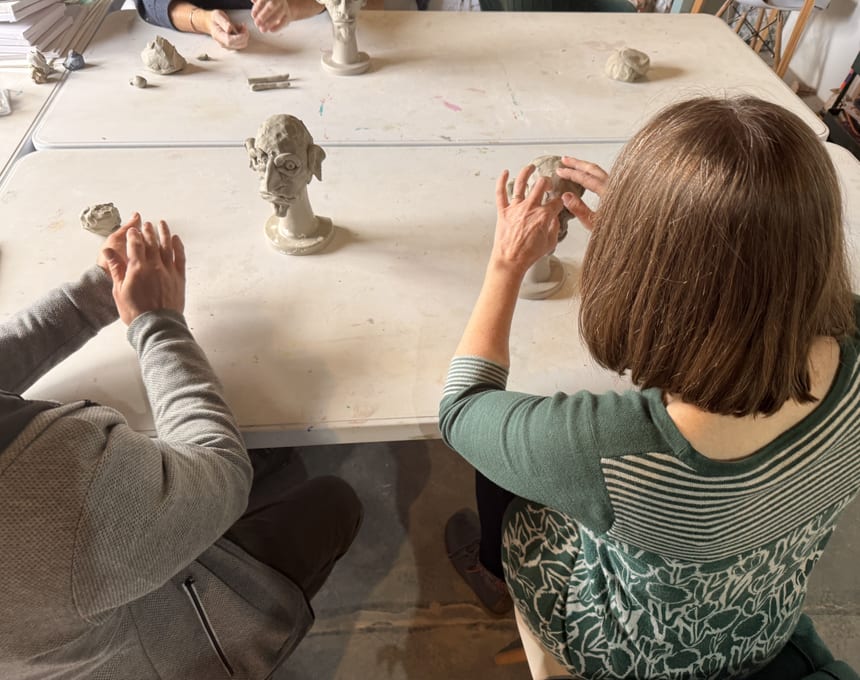
Put clay in a PDA child’s hands. Give them space, no agenda, no right answer. And something shifts. The child who “won’t do anything” spends an hour creating the world’s most dramatic dragon. Or a zombie unicorn. Or an entire landscape with a backstory involving nine characters and a moral dilemma.
Safety opens the door. Creativity lets them walk through it.
In our sessions, using sensory-led creative work, nature-based learning, and a genuinely low-demand environment — we see PDA children begin to trust. To explore. To find out what they’re capable of when nobody’s pushing them toward a specific outcome.
We also support families, because PDA can be an isolating road to walk without guidance. Whether you need help understanding the profile, navigating school support, or simply want someone to tell you that you’re doing the right things, the SEND Compass was built for you.
How Be Creative Cornwall Supports PDA Children
We offer specialist therapeutic and creative alternative provision for children and young people with PDA, based in Wadebridge, Cornwall. Our approach includes:
– Sensory-led creative sessions using clay, natural materials, and hands-on making
– Nature-based learning in a low-pressure, flexible environment
– A relationship-first model built on trust and genuine autonomy
– Family advocacy and guidance for parents navigating the SEND system
We work with families, schools, and local authority referrals. If your child has a PDA profile and you’re looking for a different kind of support, we’d love to talk.
Frequently Asked Questions
Pathological Demand Avoidance (PDA) is a profile on the autism spectrum characterised by an anxiety-driven need to avoid everyday demands and maintain a sense of control. It is not defiance or a behavioural choice, it is a neurological response to perceived threat. Children with PDA may resist even requests they want to comply with.
PDA is considered a profile within the autism spectrum, but it presents differently from more commonly recognised autistic profiles. Children with PDA often show stronger social awareness and can use social strategies (humour, distraction, negotiation) to manage demands. The anxiety and need for control, however, are often more pronounced.
This is one of the most common and most misunderstood aspects of PDA. Compliance depends on the child’s current anxiety level, how the demand is framed, the environment, and many other factors. It is not inconsistency for its own sake. It reflects a nervous system that is constantly weighing up perceived threat and safety.
PDA-friendly approaches focus on reducing demand, offering genuine choices, sharing control, using playful connection, and regulating the nervous system before attempting any task. Traditional reward-and-consequence approaches often increase anxiety in PDA children and are generally not recommended.
Yes. We offer specialist therapeutic and creative alternative provision for PDA children in Cornwall, based in Wadebridge. Our low-demand, relationship-first approach is designed specifically to meet the needs of children who struggle in traditional educational settings.
 PDF · Approx 12 pages · Readable on phone, tablet or laptop