Children & young people
Dyslexia Support for Children
A space where being different isn’t something to fix.
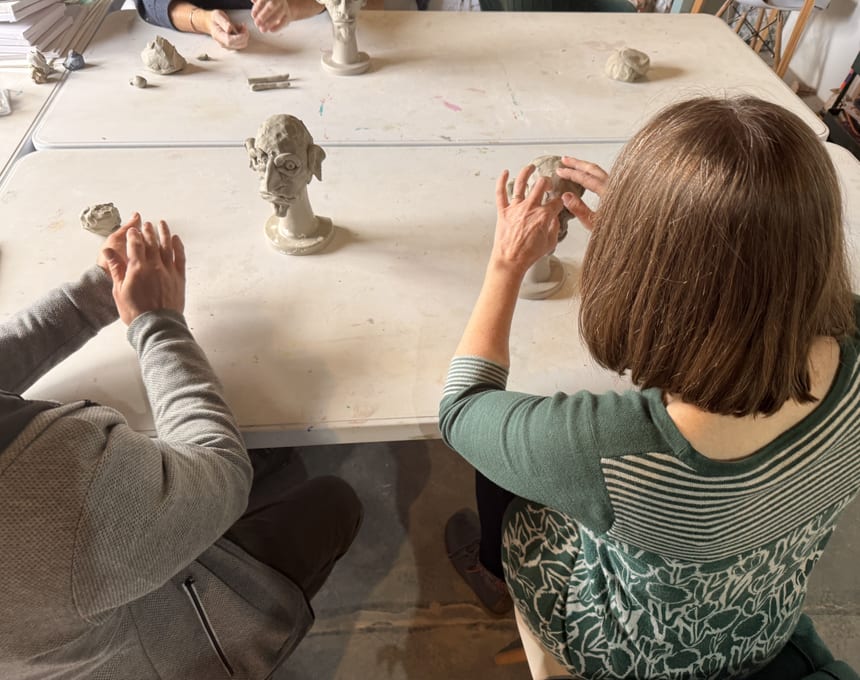
Autistic children see, hear, feel and process the world with an intensity that most environments aren’t built for. School rewards sameness. We build something else — a space where their neurology isn’t the obstacle. The obstacle is the mismatch between the child and the environment. We change the environment.
“She didn’t make me feel stupid. She made me feel clever.”
1 in 10
children in the UK have dyslexia
80%
of those with a learning difference have dyslexia as a primary factor
2×
dyslexic thinkers are twice as likely to run their own business
40%
of self-made millionaires are thought to be dyslexicking early support critical
Understanding SpLDs
Different neurology, different strengths, different routes.
Dyslexia — when text is a puzzle
Letters move, swap, disappear. Reading is exhausting. Spelling feels like guesswork. These children often have extraordinary verbal and creative abilities that get completely overlooked because the school gate is guarded by phonics. We assess what they CAN do brilliantly — and build from there.
Dyspraxia — when the body won’t cooperate
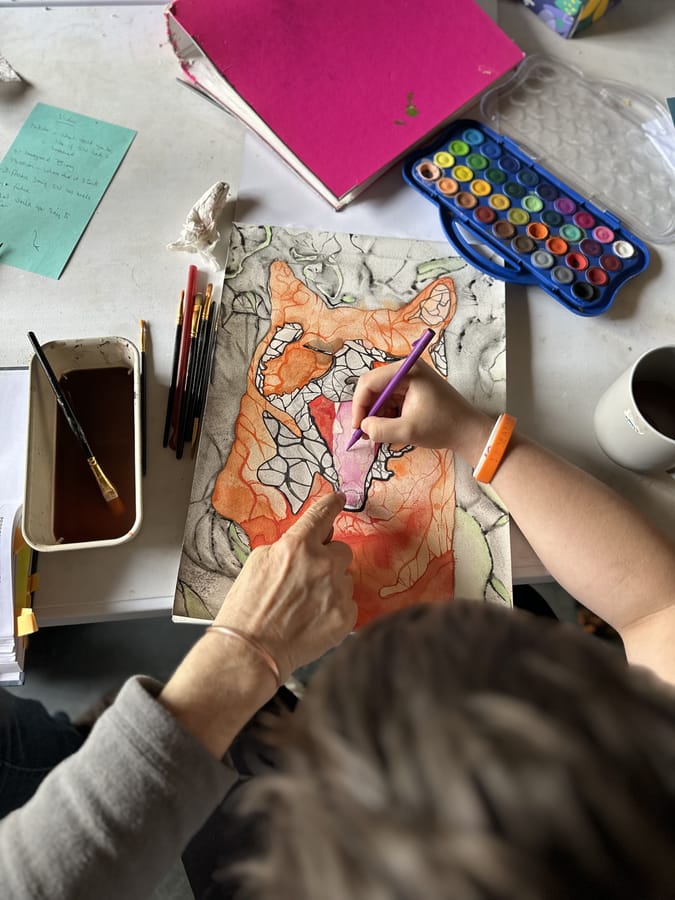
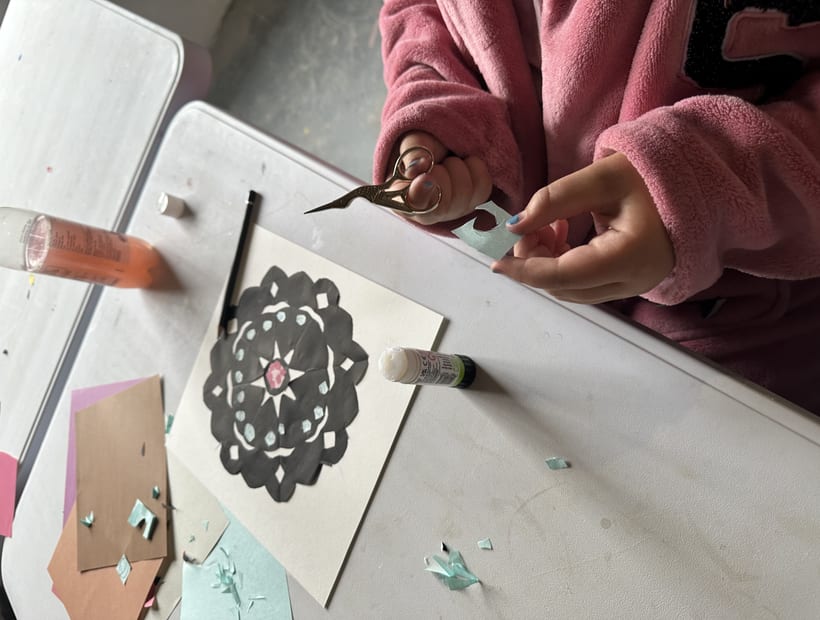
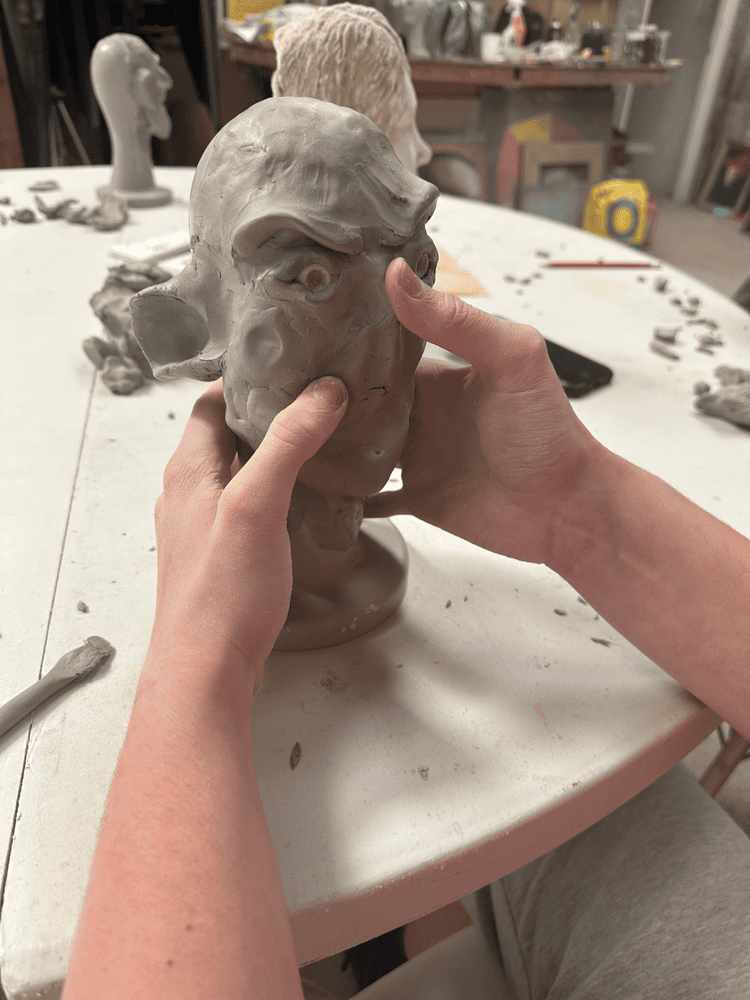
The pen won’t stay still. The shoelace won’t tie. The ball won’t be caught. Dyspraxic children live with a body that feels unreliable, which erodes confidence far beyond PE class. Our studio work builds fine motor control through meaningful making — not exercises, but creations.
Dyscalculia — when numbers don’t make sense
Time, money, sequences, patterns — for dyscalculic learners, these aren’t intuitive. They need concrete, visual, embodied ways in. We use construction, cooking, art measurement and real-world maths — never worksheets in isolation.
Dysgraphia — when writing is the barrier
The ideas are there. The vocabulary is rich. But getting it onto paper is a wall. We offer scribing, dictation, typing, and creative outputs that bypass the pen entirely — because the ideas matter, not the handwriting.
How we help
Strength from difference, not in spite of it.
Visual and spatial strengths first
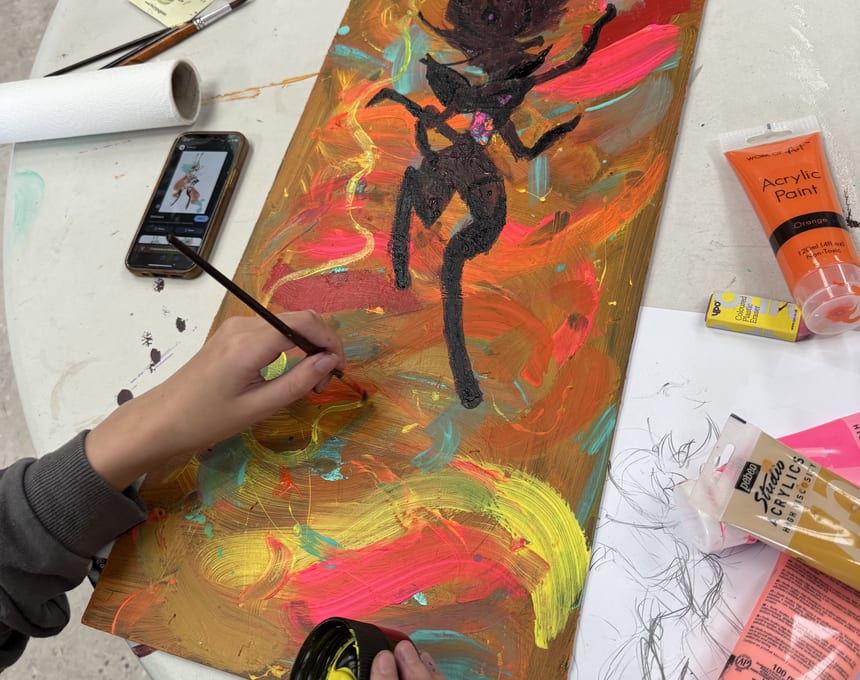
Many of these children think in pictures, patterns and 3D space. We start there. Their strengths aren’t a consolation prize — they’re the foundation for everything else.
Multisensory learning by default
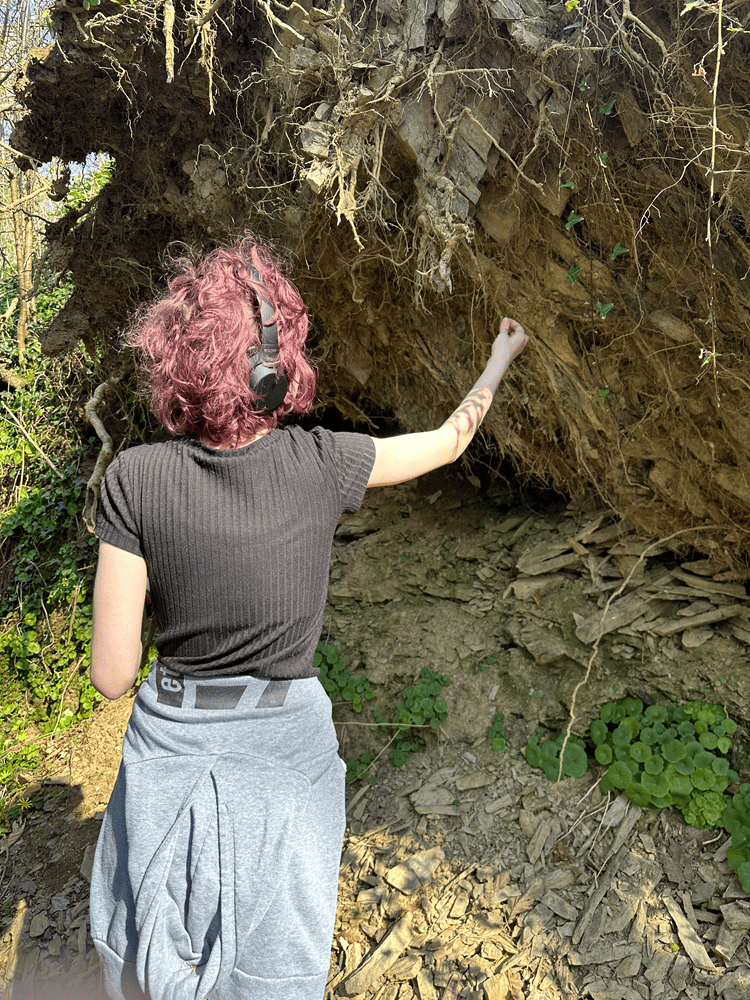
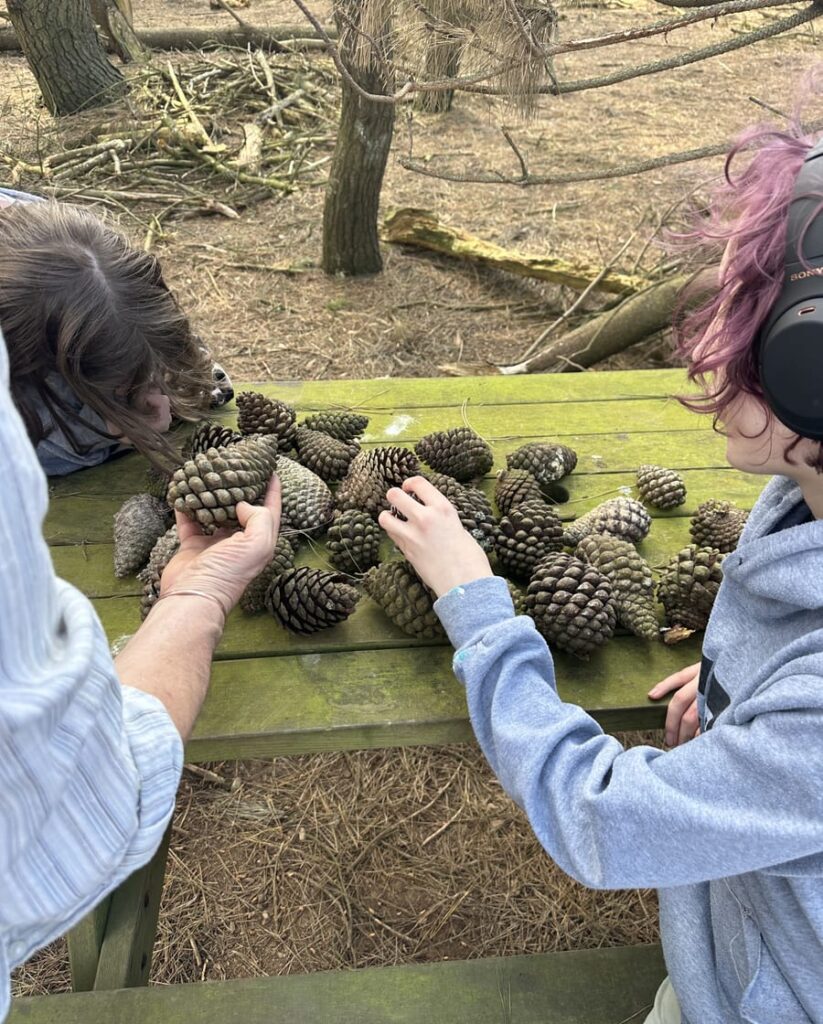
Touch it, build it, move it, say it, sing it. If one pathway is blocked, we find another. And another. There is always another way in.
Rebuilding confidence, not just skills
Years of ‘try harder’ leave a mark. Our work includes repairing the relationship with learning itself — so the child believes they CAN, before we ever ask them to prove it.
A closer look
What each difference looks like at home and at school.
Dyslexia
Affects around 10% of the population
A specific learning difference that affects reading, spelling and processing written language — not intelligence. Many dyslexic people are highly creative, imaginative and excellent problem solvers.
Signs parents notice
- Slow or laboured reading
- Difficulty decoding unfamiliar words
- Letters or numbers appearing reversed
- Trouble spelling, even familiar words
- Tiredness or frustration around reading tasks
Dyspraxia (DCD)
Estimated to affect 5–6% of children
Developmental Coordination Disorder affects how the brain plans and coordinates movement. Children may struggle with motor skills, organisation and sometimes speech, even though they understand what they want to do.
Signs parents notice
- Clumsiness or frequent trips and falls
- Difficulty with handwriting, scissors or buttons
- Trouble with sports or coordination
- Difficulty organising belongings or schoolwork
- Fatigue from tasks requiring coordination
Dyscalculia
Estimated to affect 3–6% of the population
A specific learning difference that affects understanding numbers and mathematical concepts. Sometimes called ‘maths dyslexia’, it involves different brain processes — particularly how number sense develops.
Signs parents notice
- Difficulty understanding quantities
- Trouble learning times tables
- Difficulty telling time or handling money
- Losing track when counting
- Anxiety or frustration around maths
Dysgraphia
Often appears alongside dyslexia, dyspraxia or ADHD
Affects a child’s ability to write clearly and efficiently — handwriting, spelling and organising thoughts on paper. Children often know exactly what they want to say but struggle to get their ideas down.
Signs parents notice
- Very slow or difficult handwriting
- Messy or inconsistent letter formation
- Avoiding writing tasks
- Hand pain or fatigue when writing
- Strong verbal skills but weak written output
“My daughter came home from her first session and said, ‘Mum, Emma didn’t make me feel stupid for not knowing the words. She made me feel cleverfor how I saw them.’ That was the moment everything changed.”
Parent of a 10-year-old with dyslexia
Not sure where to start?
Every child has a way in.
We’ll help you find yours.
Book a consultation. We’ll talk about what your child finds hard, what they love, and how we might build a bridge between the two.