


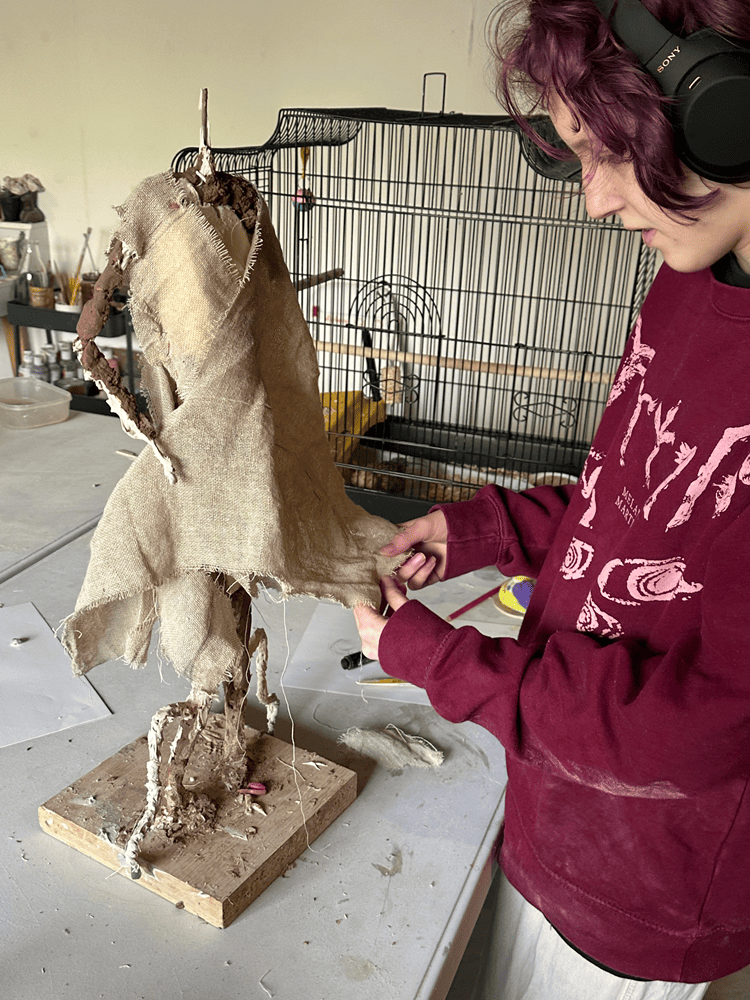
If ADHD were a person, it would be that friend who has 47 tabs open in their brain, three unfinished cups of tea around the house, and a sudden urge to paint their bedroom at 2am.
And yes, I say this with love and lived experience.
ADHD brains are wired differently. But here’s the part the world so often forgets:
They are also wired for creativity.
The Myth of the “Disorganised” ADHD Mind
ADHD gets a bad reputation. Messy. Chaotic. Inconsistent. Late. Forgetful. Seemingly allergic to paperwork (I swear forms replicate themselves in the night).
But ADHD isn’t a lack of focus. It’s inconsistent focus.
When something sparks genuine interest, ADHD children — and adults — can create masterpieces, inventions, stories, and entire room rearrangements in the time it takes a neurotypical brain to find a pen.
ADHD affects roughly 1 in 20 children, and it shows up differently in every child. Some are buzzing with visible energy. Some are quietly lost in thought. Some are both, depending on the day. What they share is a brain that doesn’t follow a straight line — and that’s not a flaw. That’s a feature.
Why Creativity Loves a Nonlinear Brain
ADHD brains naturally think in:
- Tangents
- Colour
- Movement
- Emotion
- Patterns
- Explosion-level imagination
Which, as it turns out, is perfect for creativity.
Many of history’s most innovative thinkers — inventors, artists, storytellers — showed what we’d now recognise as ADHD traits long before we had a name for it. The restless energy. The obsessive deep-dives. The ideas that arrived at inconvenient times and refused to leave.
Research supports this too. Studies into divergent thinking — the ability to generate multiple ideas from a single starting point — consistently show that people with ADHD score highly. It’s not despite their brain. It’s because of it.
My Own ADHD Creativity Story
I was diagnosed later in life.
For years, people assumed my hyperfocus was simply “a strong creative streak.” My overwhelm was “me being dramatic.” (If I had £1 for every time I heard that, I’d have funded my own arts building by now.)
ADHD had been there all along:
- The hundreds of half-finished projects
- The hyperfocus sculpting sessions that went on for hours without my noticing
- The complete inability to sit still in school
- The spontaneous bursts of creativity that arrived from nowhere
- The crash afterwards when my brain finally said: we’re done now
But the creativity? That part was a gift.
And one that shows up — constantly — in the children and young people I work with at Be Creative Cornwall.
What ADHD Children Look Like in Creative Spaces
Magic. Absolute magic.
Give an ADHD child a lump of clay and they won’t just make an animal. They’ll build an entire ecosystem. A political structure. A backstory involving cosmic portals and three generations of characters you didn’t ask about but are now completely invested in.
The ideas they generate — the storylines, the sculptures, the character designs, the imaginative worlds — are extraordinary. They make connections most adults can’t even see.
This is what we see every week at Be Creative. Children who have been told they’re “too much” for a classroom arrive here and discover they are exactly enough for a creative space. The energy that exhausts a traditional school setting becomes the very thing that fuels brilliant, original work.
In our sessions — using clay, natural materials, sensory exploration and nature-based learning — ADHD children don’t just cope. They flourish.
Why Creativity Helps ADHD Children Thrive
Creativity works so well for ADHD brains because it does things they genuinely love:
1. It Engages Interest — and Therefore Focus
ADHD isn’t an absence of focus. It’s focus that arrives when something matters. When an ADHD child cares about what they’re doing, they’ll dive deep. Really deep. Hyperfocus deep.
Creative work — especially hands-on, tactile, exploratory making — meets ADHD children where they are. It doesn’t demand they fit a mould. It gives them something worth caring about.
2. It Removes Rigidity
No right answers. No single correct process. No pressure to perform or conform. Just exploration, discovery, and the freedom to make glorious mistakes.
This is the opposite of so many traditional school environments, where creativity is often the first thing squeezed out when timetables get tight — and yet it’s precisely what ADHD children need most.
3. It Builds Emotional Regulation
Creative expression gives ADHD children a healthy outlet for the big emotions that come with a brain that feels everything intensely. At Be Creative, we use creativity not as “arts and crafts,” but as a genuine therapeutic tool — supporting emotional regulation, self-awareness, and the ability to process feelings without needing to put them into words.
What to Look For: Is Your Child Showing ADHD Creative Strengths?
If your ADHD child:
- Is constantly doodling on every piece of paper in sight
- Builds elaborate Minecraft worlds or LEGO structures for hours
- Rewrites entire stories, characters, or game rules to make them better
- Makes “chaos art” that somehow makes complete sense to them
- Creates sculptures out of recycling, sticks, or whatever’s to hand
- Rearranges their room at midnight because the energy arrived and demanded it
- Invents worlds, backstories, or entire languages just for fun
…they are not “messy” or “distracted.”
They are creative. And creativity is one of ADHD’s greatest strengths.
What Parents Should Know
So much of parenting a neurodivergent child is about understanding the why behind behaviours that, on the surface, look like problems.
The midnight room rearrangement isn’t defiance. It’s a brain that got an idea and couldn’t let go of it.
The doodles aren’t inattention. They’re a mind that processes information by doing something with its hands.
The hyperfocus isn’t inconsistency. It’s deep engagement — the kind most of us spend our whole lives trying to access.
When I began building the SEND Compass (https://becreative.solveweb.co.uk/the-send-compass/) — our guide for families navigating the world of SEND — I knew from the beginning that creativity had to be at its heart. Not as an activity, but as a framework for understanding your child. A way to see their strengths clearly, even when the system around them is only looking for deficits.
Creativity helps reveal the why without pressure. And when parents understand the why, everything shifts.
How Be Creative Cornwall Supports ADHD Children
At Be Creative Cornwall, we work with children and young people with ADHD (https://becreative.solveweb.co.uk/who-we-help/adhd/) as part of our specialist alternative provision, based in Wadebridge. Our sessions combine structure with flexibility, using tactile and nature-based learning to meet the natural rhythms of ADHD minds.
We support children who:
- Have struggled in traditional school settings
- Are experiencing school burnout or refusal
- Need a slower, more personalised approach to learning
- Thrive through doing rather than sitting and listening
- Need space to make mistakes without shame
We also support families, because navigating ADHD support in Cornwall can feel like you’re doing it entirely alone. You’re not. Whether you’re at the very beginning of a diagnosis journey or looking for a more creative approach to supporting your child’s wellbeing, we’re here.
Frequently Asked Questions
Research into divergent thinking and the ability to generate many ideas quickly, consistently shows ADHD individuals scoring highly. The same traits that create challenges in rigid environments (impulsivity, hyperfocus, nonlinear thinking) are often the source of exceptional creative ability.
ADHD isn’t a lack of focus. It’s inconsistent focus, one that arrives powerfully when something is interesting or meaningful. Creative activities tend to engage that focus naturally. It’s not a contradiction; it’s how the ADHD brain works.
Creative learning removes the rigidity that ADHD children struggle with. There’s no single right answer, no sitting still for long periods, and no pressure to perform within a narrow definition of “correct.” Hands-on, exploratory making naturally engages ADHD brains and supports emotional regulation at the same time.
Yes. We offer specialist therapeutic and creative alternative provision for children and young people with ADHD across Cornwall, based in Wadebridge. We work with families, schools, and local authority referrals. Get in touch
 PDF · Approx 12 pages · Readable on phone, tablet or laptop